
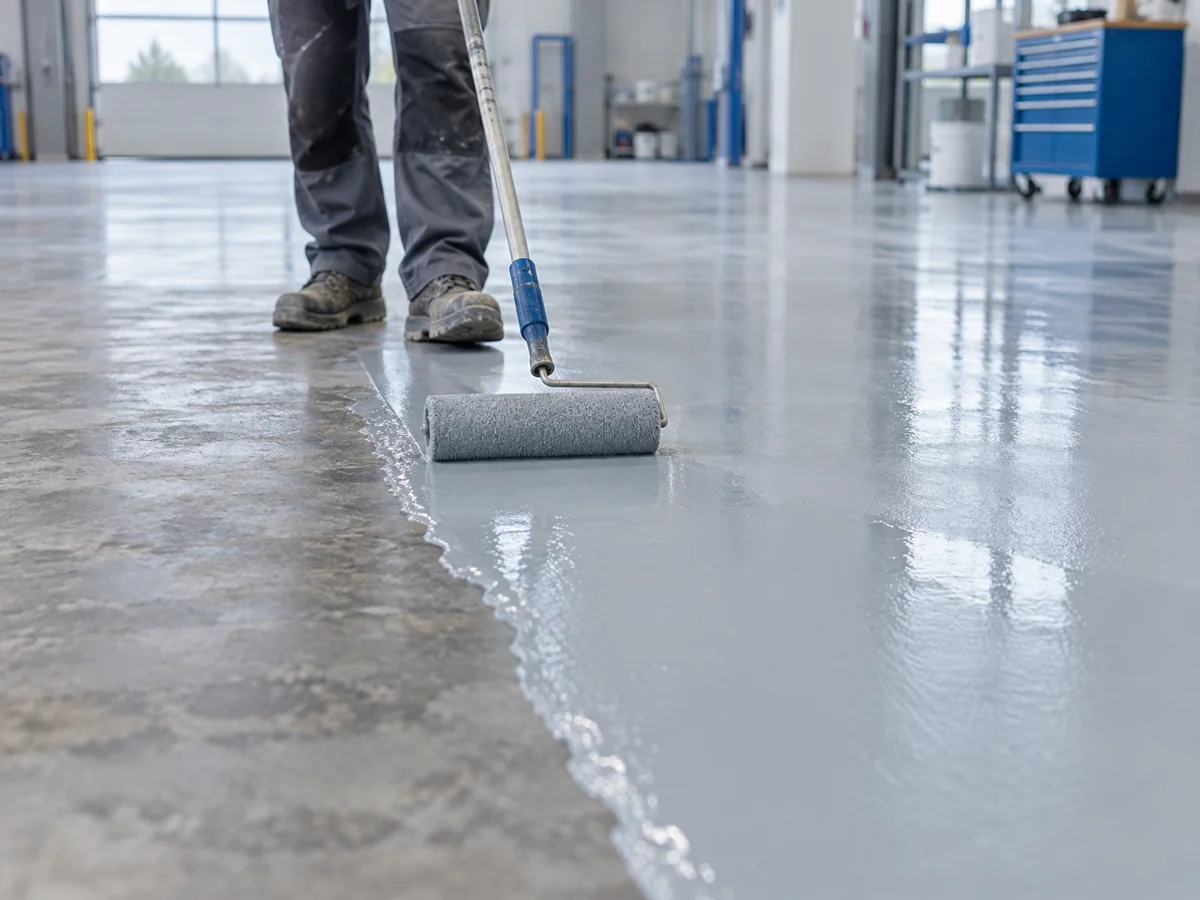
Quick answer
- Workshop or production floor that needs a tough, easy-clean finish
- Epoxy Floor Paint or ColyFloor 5500FC
- Seamless, smooth floor for clean rooms, food, pharma or hospitals
- ColyFloor 6510SL
- Decorative floor for shops, showrooms or homes
- AtlasFloor
- Car park deck, hangar or floor exposed to sunlight
- ColyFloor 2500FC
- Tennis, basketball or futsal court
- Colythane Floorcoat 500
- New or dusty concrete that needs priming or sealing first
- ColyFloor 5000PM or ColyFloor 6000PM
- Damaged or uneven floor that needs a heavy-duty underlayment
- ColyFloor 3000MT
Step 1: Describe how the floor is used
Start with the service conditions, because they decide the system more than colour does. Before you ask for a quote, write down:
- Traffic: foot traffic only, trolleys, forklifts or car wheels.
- Spills and cleaning: water, oil, solvents, acids, alkalis or salt solutions, and which cleaning agents you use.
- Indoor or outdoor: floors exposed to sunlight need a UV-resistant topcoat.
- Appearance: gloss, semi-gloss or matt, plain colour or decorative.
- Downtime: how long the area can be closed before it goes back into use.
Step 2: Check the concrete first
Most floor coating failures start underneath the coating. Concrete that is weak, dusty, contaminated with oil, or holding moisture can cause peeling or blistering, and this matters more in Malaysia’s humid climate.
Ask for the concrete to be assessed for soundness and moisture before choosing the system. If there is a moisture issue, a primer or sealer designed for it, such as ColyFloor 6000PM, can be part of the solution. Its technical sheet describes use in moisture-barrier systems together with ColyFloor 3000MT. It is not a substitute for a proper moisture assessment.
Step 3: Understand the layers
A typical resin floor is built up in layers. Not every job needs every layer:
- Primer or sealer: penetrates and seals the concrete so the next coats adhere. Options: ColyFloor 5000PM (quick-drying primer and anti-dust sealer) or ColyFloor 6000PM (solvent-free penetrating primer/sealer for moisture-barrier systems).
- Underlayment (only when needed): levels and strengthens damaged or uneven floors. Option: ColyFloor 3000MT, a three-component epoxy mortar.
- Body or finish coat: the main protective layer. Options: Epoxy Floor Paint, ColyFloor 5500FC, ColyFloor 5300FC, or ColyFloor 6510SL for a seamless self-levelling floor at 1–3 mm.
- Topcoat (when needed): extra UV, gloss or abrasion protection. Options: ColyFloor 2500FC for heavy traffic and sunlight, or Colythane Floorcoat 500 for sports and circulation floors.
Step 4: Epoxy or polyurethane?
Epoxy floor coatings are chosen for adhesion, hardness and chemical resistance, which makes them the usual choice for indoor industrial floors. Aromatic epoxies can chalk or yellow in sunlight, so they are best kept indoors or protected by a UV-resistant topcoat.
Polyurethane topcoats are chosen where appearance and weathering matter. ColyFloor 2500FC is an aliphatic polyurethane with UV resistance and gloss retention, listed for car park decks and aircraft hangars. Colythane Floorcoat 500 is a full-gloss polyurethane topcoat listed for tennis, basketball and futsal courts.
Compare products
| Product | Type | Finish | Best for |
|---|---|---|---|
| Epoxy Floor Paint | Epoxy | Gloss | Working floors needing abrasion and chemical resistance |
| ColyFloor 5500FC | Solvent-based epoxy finish | High gloss | Primed indoor industrial floors with chemical splashes |
| ColyFloor 5300FC | High-solids epoxy | Semi-gloss / matt | Concrete floors where you want a lower sheen |
| ColyFloor 6510SL | Self-levelling epoxy, 1–3 mm | Glossy | Seamless floors: clean rooms, food, pharma, hospitals |
| AtlasFloor | Coloured-sand self-levelling epoxy | Decorative | Shops, showrooms, homes, commercial spaces |
| ColyFloor 2500FC | Aliphatic polyurethane topcoat | High gloss | Car parks, hangars, heavy traffic, UV exposure |
| Colythane Floorcoat 500 | Acrylic polyurethane topcoat | Full gloss | Sports courts, interior and exterior floors |
Common mistakes to avoid
- Choosing by colour or price before checking the concrete.
- Using an indoor epoxy finish on a floor that gets direct sunlight.
- Skipping the primer on new or dusty concrete.
- Opening the floor to traffic before the coating has cured as specified.
- Not asking about slip resistance for wet areas, ramps or sports floors.
Questions we often get
Can I apply epoxy directly on new concrete?
New concrete needs to cure and be checked for moisture and surface laitance before coating. A penetrating primer such as ColyFloor 5000PM is designed for priming new concrete before the ColyFloor intermediate and finishing coats. Ask our team to confirm timing for your slab.
Which floor coating is best for a car park?
Car park decks see wheel traffic and often sunlight. ColyFloor 2500FC is an aliphatic polyurethane topcoat listed for car park decks, with UV resistance and resistance to abrasion, impact and chemicals. It is used over a compatible base system.
What is the difference between a floor paint and a self-levelling floor?
A floor paint or finishing coat is applied as a thin film. A self-levelling floor such as ColyFloor 6510SL is a thicker, seamless layer (1–3 mm) that gives a smooth, continuous surface and is listed for factories, clean rooms, food processing areas and hospitals.
How long before I can use the floor?
It depends on the product, thickness, temperature and ventilation. Follow the curing times in the product’s technical sheet and plan the downtime before work begins.
This guide gives general selection advice. Always follow the product’s current technical data sheet and confirm the complete system with the Coly technical team before use.